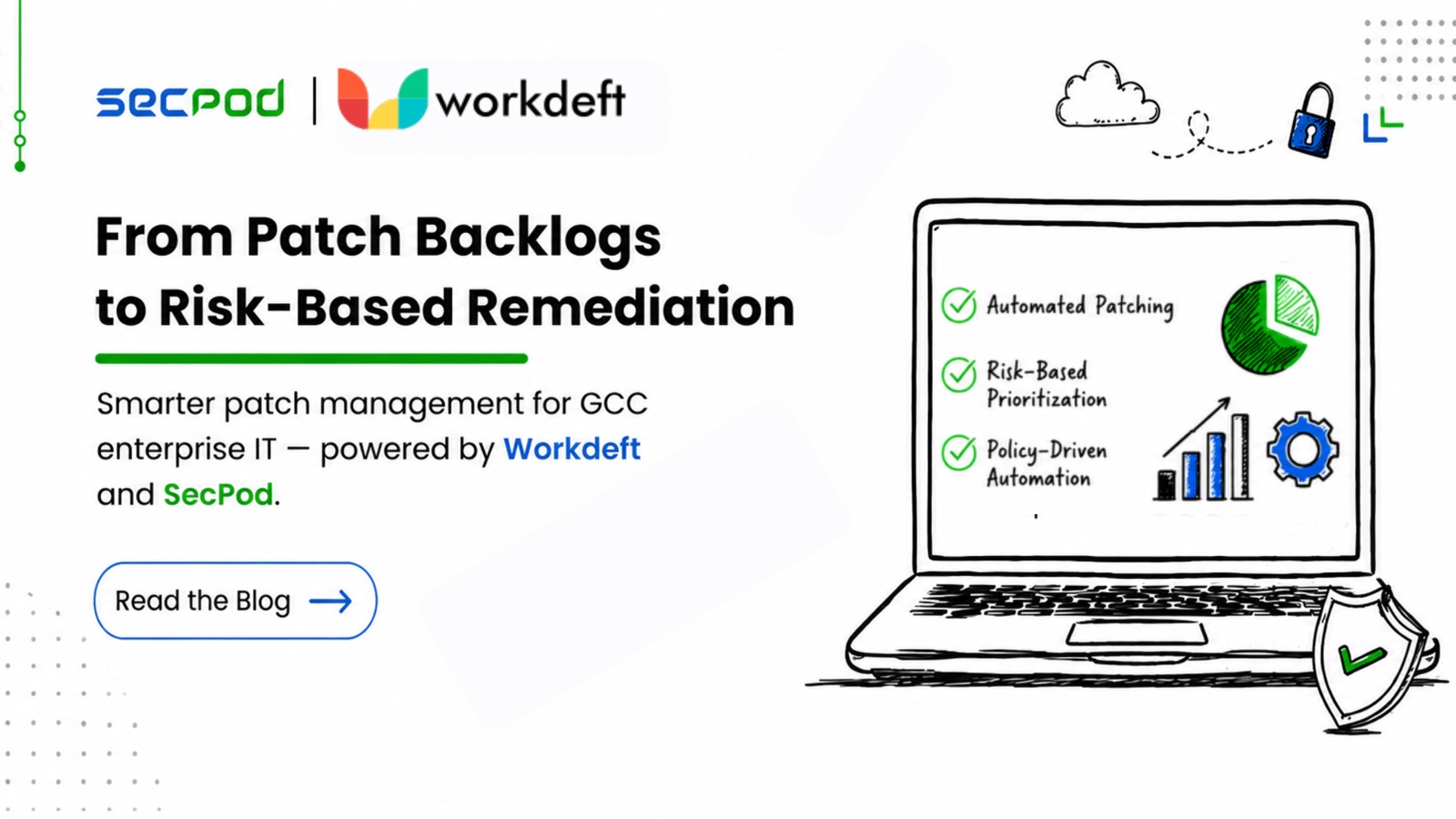
Your security team just found 10,000 vulnerabilities. What happens next?
Finding vulnerabilities isn't the hard part anymore. Deciding what to do about them is. Which one gets remediated first? Which systems are actually exposed? Which patch can wait until the next maintenance window, and which one could become tomorrow's headline? And can IT actually act on the answer without jumping between five different tools and two different teams?
As GCC enterprises expand into the cloud, adopt more SaaS platforms, and support employees working from anywhere, these questions are only getting harder to answer. The UAE's own National Cloud Security Policy points to exactly this shift, flagging asset management, device hardening, and timely patching as core parts of staying secure as cloud adoption grows. The message is simple. Finding risk isn't enough. Organizations need a practical way to remove it.
Why Patching Is Harder Than It Sounds
Patching sounds simple. A vendor releases an update, IT installs it, done. Enterprise environments rarely work that way.
A typical IT team is responsible for Windows endpoints, Linux servers, macOS devices, remote laptops, cloud workloads, and dozens of third-party applications, and every one of them keeps changing. A new laptop joins the network. A cloud workload spins up. A remote employee skips the VPN for a week. Multiply that across thousands of assets, and the old monthly patching cycle starts to fall apart. The problem was never just getting patches out. It's knowing, continuously, what needs patching, where it lives, how risky it actually is, and whether the remediation worked.
Not All Vulnerabilities Carry the Same Risk
Say an IT team finds 2,000 missing patches. Which one goes first?
Sorting by severity score alone isn't enough. Two vulnerabilities can both score 9.8 out of 10, but one sits on an isolated test machine, and the other sits on an internet-facing system with known exploit activity. Those are two very different risks wearing the same score.
Real risk prioritization has to weigh severity alongside exploitability, active exploitation, asset criticality, and business impact, not just install everything in order of scariest-looking number. This is the same logic behind SSVC-based decisioning (Stakeholder-Specific Vulnerability Categorization), which sorts vulnerabilities into clear action states: Act, Attend, Track, or Track*, based on exploitation status, asset exposure, and how mission-critical the affected system actually is. Instead of a flat list ranked by CVSS alone, teams get a short, ranked list of what genuinely needs attention now. Done well, this kind of context-aware prioritization is what takes mean time to remediate (MTTR) from weeks down to hours, and keeps it there.
Where Security and IT Lose Time
Here's what happens in a lot of organizations today: security finds a vulnerability, a ticket goes to IT, IT opens a separate patch tool, requests a maintenance window, deploys the patch, and then someone has to go check whether it actually worked. Every handoff is a chance for something to slip. Every disconnected tool is another place risk can hide.
This is exactly the gap Workdeft and SecPod are built to close together. Workdeft brings deep experience implementing and running enterprise IT operations across telecom, banking, healthcare, and retail: the ITSM systems, workflows, and integrations organizations already rely on day to day. SecPod brings Saner Platform, where vulnerability discovery, risk-based prioritization, and automated patching are already unified in one continuous process, covering Windows, Linux, macOS, and 550+ third-party applications from a single console. It combines CVSS with exploitability signals like EPSS and SSVC, so teams know which patches actually matter, not just which ones look urgent.
What to Look For in a Patch Management Platform
Not every patch management platform offers the same level of control. As organizations manage more devices, more locations, and more third-party software, a few capabilities matter most:
- Cross-platform support across Windows, Linux, macOS, and cloud workloads from a single console
- Automated patching for third-party apps like browsers, PDF readers, and collaboration tools, not just the operating system
- Policy-driven automation covering discovery, testing, approval, deployment, and verification
- Coverage for remote and hybrid endpoints, wherever people are working
- Risk-based prioritization based on exploitability and business impact, not severity alone
- Rollback support to quickly undo a patch that causes problems
- Compliance reporting that shows patch status and remediation progress across every asset
A platform missing more than one of these is likely helping teams manage updates, not manage exposure.
How Workdeft and SecPod Close the Gap
Cyber resilience doesn't come from a longer vulnerability report. It comes from closing the gap between finding a risk and actually remediating it.
By pairing Workdeft's IT operations and implementation expertise with SecPod's prevention-first approach to vulnerability and exposure management, GCC enterprises get a way to bring security and IT closer together, turning patch management from a monthly scramble into a continuous, connected part of reducing cyber risk.
Ready to move from patch backlogs to risk-based remediation? Workdeft and SecPod can help assess your current patching process and build a more continuous, automated path to closing exposure.